
Hearing Products
Sound shapes nearly every moment of your day. Finding the right hearing device is one of the most personal parts of the Second Chance Hearing experience, so it pays to take your time. Below is a plain-language look at the technology, the brands we trust, and the tools that go beyond hearing aids.
Hearing Technology
Modern Solutions for Every Type of Hearing Loss
Today's hearing technology is built to fit your life, not the other way around.
Advances in the last few years have made hearing devices smaller, smarter, and far better at handling real-world noise. Beyond traditional hearing aids, there's a whole range of products that make living and communicating with hearing loss easier to manage. Here's a closer look at the options.
Today's hearing aids do far more than amplify, many connect straight to your phone. Direct Bluetooth streaming lets calls, music, podcasts, and video audio play through your hearing aids like wireless earbuds, often with no extra hardware, and companion apps let you adjust volume, switch programs, and fine-tune settings discreetly from your phone.
For older devices or specific situations, hearing-aid-compatible (HAC) accessories bridge the gap: clip-on streamers, remote microphones that pick up a speaker's voice across a table, and TV connectors that send audio straight to your ears. Putting a little distance between the hearing aid and the phone can also cut buzzing and interference, and some accessories add true hands-free calling. Compatibility varies by phone, so it's worth confirming with both your carrier and us, and trying the setup before you commit. We'll help match the right option to the phone you already use, whether that's an iPhone or Android.
The right style depends on several things: your degree of loss and its power needs, your budget, the look you want, any skin or anatomical considerations, and how easily you can see and handle small devices. Cost is driven mostly by the technology level inside, not the style itself.
Behind-the-ear (BTE) models sit behind the ear and offer the most power and the fullest feature set, which also makes them the preferred choice for children. Receiver-in-canal (RIC) devices place the receiver down in the canal connected to a slim unit behind the ear, balancing discreet looks with great sound; they're today's most popular style and fit mild to severe loss. The custom in-the-ear family is molded from impressions of your ear: ITE fills the ear bowl for easy handling and all-day wear; ITC sits in the canal with room for controls like volume and directional mics; CIC tucks in for a nearly invisible look; and IIC sits deepest of all for a virtually undetectable fit. Most styles now include Bluetooth and wireless connectivity.
Smaller isn't automatically better, tiny devices can be harder to handle and don't suit every type of loss. At your fitting we'll weigh the trade-offs together and choose the style that fits your ears and your routine.
Over-the-counter (OTC) hearing aids became available in the U.S. in 2022 and can be bought without a prescription or a hearing exam. They're intended for adults with mild-to-moderate hearing loss and can be a reasonable, lower-cost entry point for the right person.
The trade-off is that they're self-fitted, you set them up and adjust them yourself, without a professional measuring your hearing and tuning the device to it. They aren't appropriate for more significant loss, for children, or when there's an underlying medical issue. If you've tried an OTC device and it isn't quite working, or you're not sure where your hearing falls, a quick evaluation will tell you whether an OTC option is enough or whether a prescription fitting would serve you better.
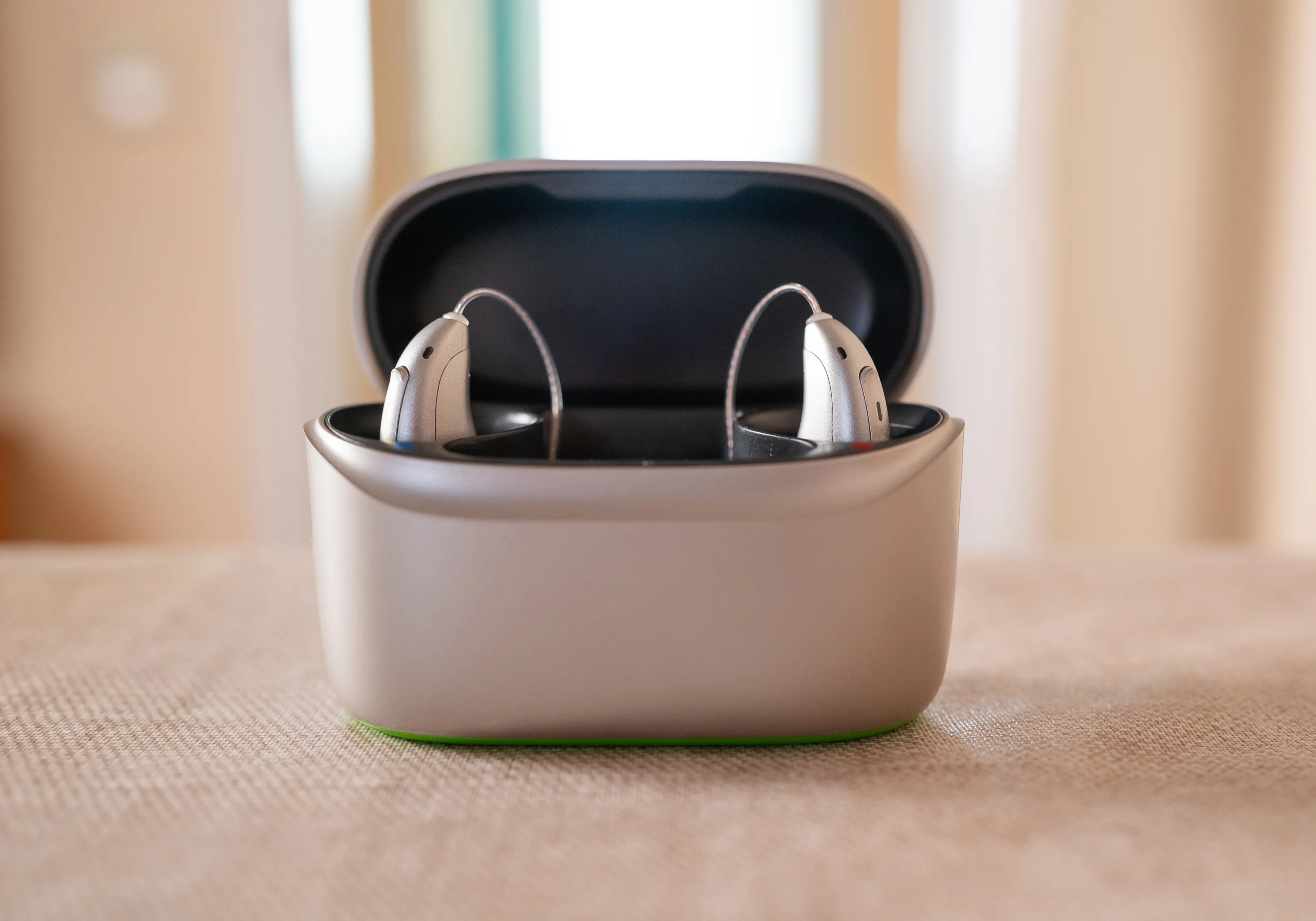
Guide to Hearing Aids
Curious About Hearing Technology, but Not Sure Where to Start?
Choosing a hearing aid isn't really about picking a brand first, it's about matching the technology level to how you actually live. Within almost every brand, devices come in tiers. The hardware looks similar; what changes is how much automatic work the device does for you, especially in background noise.
Essential
Best for quieter, predictable days, one-on-one chats, TV, and errands. Covers the basics well at the lowest cost, with more manual adjusting in tricky rooms.
Standard
A solid all-around choice for moderately active lifestyles. Adds better automatic noise handling for restaurants and small groups.
Advanced
For busier social and work lives. Faster, more refined automatic adjustments across changing environments and stronger performance in noise.
Premium
The most automatic, most natural experience in the hardest settings, crowded rooms, music, lots of movement. Built for very active listeners.
The honest answer comes from your day-to-day, not a spec sheet. At your appointment we'll talk through where you struggle most and demo the difference, so you pay for the performance you'll actually use, not features you won't.
Hearing Aid Manufacturers
Products Created by the Best in the Industry
When it comes to your hearing, you need a device you can rely on. We carry products from manufacturers with a proven track record, so whatever your budget, lifestyle, or type of loss, there's a strong option to match.
Phonak
A Swiss manufacturer known for powerful, reliable everyday devices and standout connectivity, universal Bluetooth streaming to both ears plus the Roger line of remote microphones that helps in noisy rooms and across distance. With a strong rechargeable lineup and options spanning nearly every degree of loss, Phonak is a great fit for active listeners and anyone who spends time in challenging environments.
ReSound
A Danish brand and an early pioneer of direct streaming to smartphones, ReSound is known for natural, spacious sound and excellent app-based control. Strong remote-care tools let your provider fine-tune settings without an in-office visit, making it a great match for tech-comfortable wearers who want discreet, well-connected hearing aids they can adjust themselves.

Starkey
One of the most recognizable American manufacturers, Starkey is known for pushing hearing aids beyond hearing, with health and wellness features like activity tracking, fall detection with alerts, and on-board processing for sound and even language translation. A broad style range, including very discreet custom options, makes Starkey a good fit for wearers who want a device that doubles as a health companion.

Oticon
Founded in 1904, Oticon builds around a "BrainHearing" philosophy: delivering a fuller, more natural sound scene so your brain works less to make sense of speech, rather than narrowly isolating a single voice. That open approach shines in busy, dynamic environments and suits wearers who want clarity without feeling cut off from the world around them.
Signia
A German brand with deep engineering roots, Signia is known for sharp speech clarity in groups, natural-sounding own-voice processing, and stylish form factors, including models designed to look like modern wireless earbuds. It's a strong choice for wearers who care about both conversation performance and a discreet, contemporary look.

Widex
A Danish manufacturer prized for exceptionally natural, low-distortion sound and ultra-fast processing that avoids the tinny, delayed quality some wearers dislike. Widex is also a leader in tinnitus-relief features, making it a favorite for music lovers, sound-quality purists, and anyone sensitive to artificial-sounding amplification.

Unitron
A Canadian brand known for flexible, upgradeable technology and a try-before-you-commit approach that lets you experience different performance levels before deciding. With reliable, straightforward devices and solid connectivity, Unitron is a great fit for first-time wearers who want to find out what they actually need without overspending.
Lyric
An extended-wear device that sits deep in the ear canal and is 100% invisible. Placed by a trained provider, Lyric stays in around the clock for months at a time, no daily insertion and no batteries to change, with natural sound thanks to its deep placement. It's ideal for wearers with mild-to-moderate loss who want a truly invisible, low-maintenance option. Candidacy depends on your ear anatomy, which we'll check at your visit.
Not sure which brand fits your hearing and your lifestyle? That's exactly what we're here for.
Talk With Our TeamHearing Protection
Make Protection a Priority
Noise-related hearing loss is permanent, and almost entirely preventable.
Noise is the most common cause of hearing loss, yet only about eight percent of adults wear protection consistently. Sounds at or above 85 dB can damage hearing over time, and the louder it gets, the faster the harm, well-fitted protection can cut that impact by as much as 30 dB. We carry a wide range of options so you can find protection that fits your lifestyle and that you'll actually wear.
Standard foam earplugs make music sound dull because they cut the high frequencies more than the lows, so most musicians won't wear them. Musician's earplugs are different: a tuned filter lowers the volume evenly across pitches, keeping the sound clear and balanced, just quieter. Over-the-counter versions reduce sound by roughly 20 dB, enough to protect you without distorting speech or music, while custom-made plugs seal deep in the bony part of the canal, which also reduces the hollow, boomy "occlusion" feeling some players get with cheaper plugs.
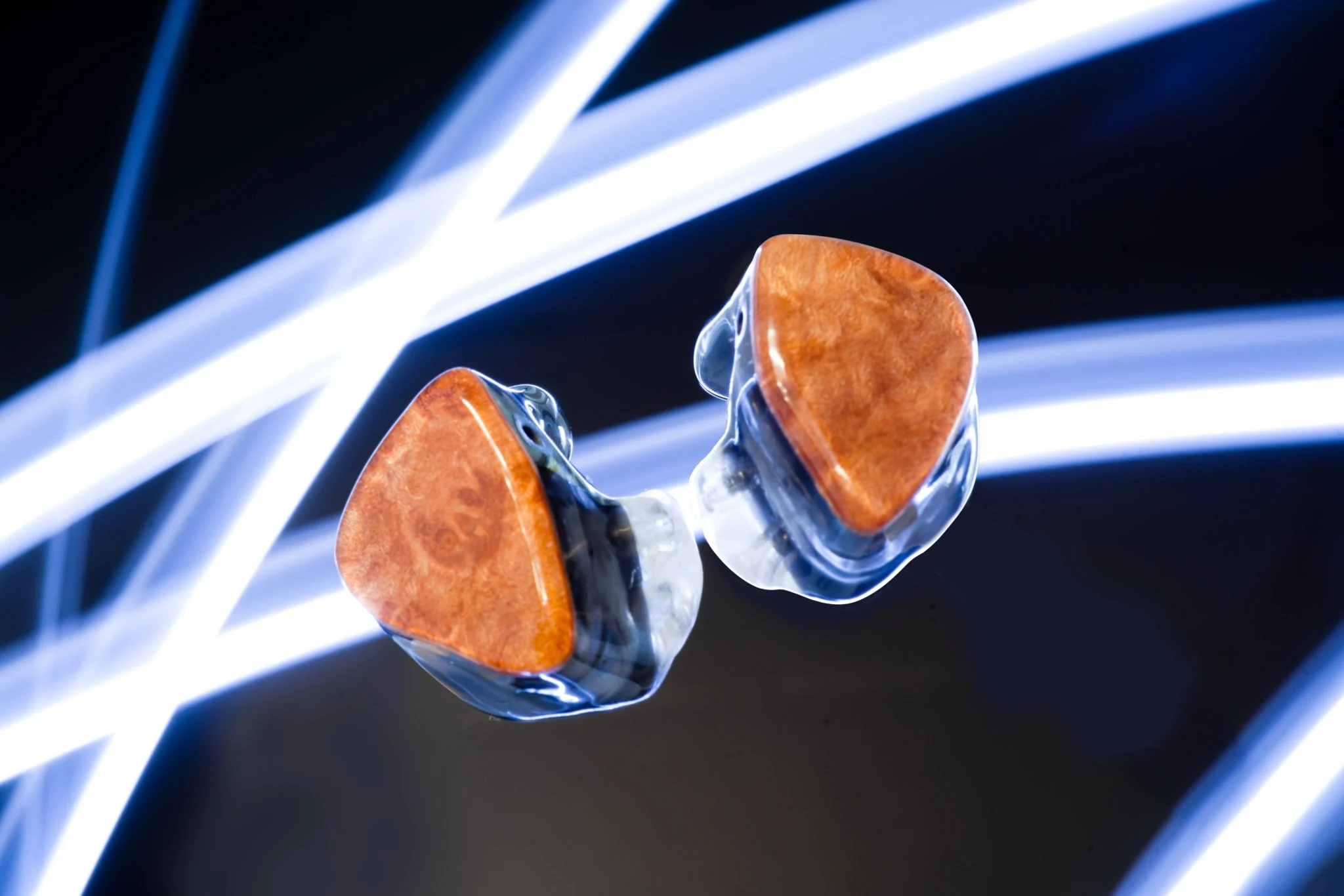
For performers in front of large audiences, in-ear monitors (IEMs) are now the standard, they let you hear a clean personal mix while sealing out damaging stage and crowd volume. IEMs work best custom-molded to your ears, though universal models with swappable foam or silicone tips offer a semi-custom option. Either way, the ear impression is the most important step, so it's worth having it done by someone experienced. If you play, teach, mix, or work around live sound, this is some of the best hearing investment you can make.
Hunters and shooters face a tough problem: they need to block the sudden, damaging crack of a gunshot while still hearing range commands, game movement, and conversation. Electronic hearing protection solves both at once. It amplifies quiet, ambient sounds so you stay aware of your surroundings, then instantly clamps down on the loud impulse noise of a shot to protect your ears.
Options range from over-the-counter electronic earmuffs to custom in-ear units molded for a low-profile fit under a cap or behind a stock. For custom earmolds we work with Westone Labs in Colorado for a high-quality, precise fit. We'll match electronic protection to how and where you shoot, so you stay safe without losing situational awareness.
Custom hearing protection is molded from impressions of your ears, so it seals better and stays comfortable far longer than generic foam. We make protection for a range of needs: industrial and workplace noise, motorcycling, concerts, sleeping, and swimming or surfing, where custom swim plugs keep water out and help prevent ear infections. Full-shell molds suit high-noise environments, half-shell molds handle mid-level noise, and a filtered attenuator can be added so you still hear conversation while you wear them.
Because each set is made to the exact shape of your ear, the fit is secure and repeatable every time. Custom plugs also tend to be more economical over time, unlike foam that loses its seal and gets tossed, they hold their protection and last for years. If you're regularly around noise loud enough to make conversation difficult, custom protection is a small step that pays off well into the future.
Visual Assistive Listening Solutions
Additional Tools to Support Clear Communication
Hearing aids do the heavy lifting, but they aren't the only tools that help. Assistive listening technology fills specific gaps, especially around the phone. Captioned telephones display the words of your conversation on a large, easy-to-read screen in near real time as the other person speaks, so you can listen and read along at once. CapTel works like any other phone and pairs with a free captioning service, no monthly fees and no change to your phone bill, with setup as simple as plugging into a phone line or your internet. CaptionCall adds a large touchscreen, audio you can customize to your specific hearing loss, a telecoil connection for hearing aids, and a visual ringer.
Because these are funded through federal programs, a CaptionCall or CapTel phone is often available at no cost to people with hearing loss, and our providers can complete the certification that qualifies you. Beyond the phone, TV streamers, personal amplifiers, and alerting systems that use light or vibration for doorbells and alarms can all help. If a particular situation is still hard even with well-fitted hearing aids, ask us, there's usually a simple tool that closes the gap.
Let's Find the Right Fit for You
The best way to choose a hearing product is a conversation, not a catalog. Book a visit and we'll walk through your options together.
Schedule an Appointment